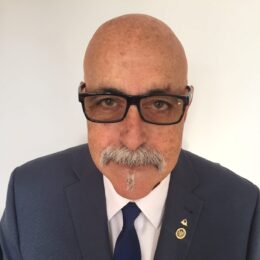
The Advanced Academic Primer:
For Students of UTSC


Introduction

As university students we are so often buried under documents explaining things (how to use Rosi, how to get a Tcard, how to avoid plagiarism, etc.) that we are lulled into thinking we know how the whole institution works when in fact we’ve only been taught how to use and navigate it, not the essential details about what’s really happening or how it functions. I am frequently reminded of this fact when I talk with academically active and engaged students, and I mean the kinds of students who are really paying attention, and then find out they don’t know certain things that amaze me. And then there are days when I learn new things myself, so it never really ends.

As VP Academics for the SCSU, it occurred to me that students could really use a comprehensive explanation of how the university works, at least with regards to academics. I didn’t imagine at the time it would turn into the massive project it became, but the length of this document (15,000 words plus) is evidence of the fact that there’s a lot worth knowing. I’ve created a table of contents with internal links, so you won’t need to read it all if you don’t wish to. Please feel free to navigate it like a FAQ.

I’ve called this an “advanced” academic primer because I’ve spared no details where I think they are useful. This isn’t intended for first year students, but rather for those who have had a chance to get settled and want to know more. Information I’ve included here runs the range from stuff most students figure out by the time they gradate to things probably no more than one student in a hundred ever really understands. I’m writing for the students running academic clubs, elected as representatives, engaged in mentorship and formal or informal academic advising, for those looking to improve their own prospects for professional or especially graduate school, and finally to anyone else who just wants to know.

Some of what’s contained in this document may never impact the university life of most students, but then you never can tell for sure. Additionally, I think the measure of a real education is taking an interest in ones surroundings, and for all of us that’s going to be UTSC for four years or so, so to an extent it’s useful for its own sake. Finally, remember that university is built around scholarship, and if you ever need to get anything out of the faculty or administrators of UTSC you’ll do far better if you can prove that you know what you are talking about. That’s academic advocacy 101, and what I do as VP Academics for the SCSU. I’ve tried to distill here, as best I can, all the information that goes into doing my job as well as I can. I’ll gladly take questions, comments, and criticism at jeff.rybak@utoronto.ca.

Take care,
Jeff


Table of Contents

Last up-dated January 3rd, 2005


All About Professors and Instructors

It's funny, but one of the things that seems least understood, among students who would really benefit by knowing more, is just what it means to be a professor and how the people who are learning from got to the positions they now hold. Even the title itself is problematic. Some people we call professors because they have PhDs, some we call professors because they are permanent members of faculty even without PhDs, and some may be neither and accept the title anyway (though most will not). Believe me when I say that not all professors are created equal and I'm not just referring to the fact that some of them put you right to sleep and others actually seem entertaining at times. Understanding who is in front of the classroom, and why, and how they got there and what their qualifications are can be of great benefit to students, both from a general advocacy perspective, and also for your own good as a student.


Contract vs. tenure

The most important distinction among professors is between those who are tenure-stream and those who are on contract in some form. A tenure-stream professor either has or is working towards a permanent (and probably lifetime) position as a member of faculty here at UTSC, while a contract professor is, on one level or another, basically a temp. This is very important to understand and has the potential to really impact your long-term educational plans. When you finally graduate from UTSC you may well want letters of reference to graduate and professional schools. Obviously you want those letters from professors you relate to and you did well with, professors who can truthfully say good things about you. But however much you may have loved that contract professor from your first and second years, and however well you may have done in her classes, if she isn't here anymore when you graduate it won't do you much good. So it's a good idea to learn early on who is regular faculty and who isn't, if you can. It isn't always obvious.


Assistant, Associate, and “full” Professors

In you want to know who is permanent faculty and who isn’t, a good place to start is the course calendar. In general, anyone who is noted as an Associate Professor, a Professor (without any other prefix, sometimes called a “full” professor), or a Senior Lecturer is almost sure to be permanent faculty. Sometimes those noted as either Assistant Professor or Lecturer are working towards becoming permanent faculty (in which case they’ll at least likely be here when you graduate) but they could also be temporary. Anyone not in the course calendar at all is probably not permanent faculty but you can never be 100% sure on that point, because last minute hires do happen. Returning contract professors are also often listed in the calendar, so seeing a name there is no guarantee they are permanent, simply that they’ve probably been here at least one year already. The surest way to know if a particular professor is permanent or not is simply to ask him or her. Seriously. If you sound like you know what you are talking about and are genuinely interested, it isn’t considered impolite to ask if a professor has, or is working towards, tenure. Though you may surprise most people with that question. The institutional role and position of a tenured or tenure-stream professor is so distinct in the organizational scheme of the university that it is a very valid question to ask and a distinction that professors often make among themselves regardless.


Lecture vs. Research streams

Within the "tenure-stream" kind of professor (the permanent kind) there are again two kinds of professor, the first (and by far the most common) is research-stream faculty, the classic kind of professor you probably think of naturally. These are professors who are employed to do research, to instruct classes and to help run the administrative side of the academic areas they are responsible for. There is also, however, a more recent kind of lecture-stream professor who is not expected to conduct research but rather offers more classes and is a full-time instructor. For many administrators and people involved with the structure of U of T the introduction of lecture-stream professors is a really big deal, either because it addresses problems in the system (for fans of the innovation) or because it seems to undermine the traditional idea that U of T is a research-based university (for those who are not fans) but the question of teaching vs. research is a debate unto itself. For now, just understand that among the permanent members of faculty (tenure-stream) there are those who still do research and those who on only responsible for leading classes. And again, understanding this distinction can be useful, if for no other reason, because it may influence your thoughts about letters of reference. Lecture stream professors, whatever their strengths in the classroom, aren’t likely to be known outside of U of T. For a really good letter of reference to graduate school (unlike professional schools, where it may matter less) it would be advisable to ask someone who has a reputation in the field. When research-stream professors earn tenure they generally move from being Assistant Professor to Associate Professor, and when lecture-stream professors earn tenure they generally move from being Lecturer to Senior Lecturer. You won’t find many Senior Lecturers at UTSC right now because most often the position takes five years to attain and the program has just barely been in existence that long.


More about research

This section applies mainly to research-stream professors (the great majority, as described above) but also to an extent to lecture-stream professors who may well be doing research regardless. Understanding the role that research plays in the lives of university professors can be the key to really connecting with them, if you wish to, and distinguishing yourself as an exceptional student. You must remember that however much some professors may care about teaching and devote themselves to the goal of improving their skills at it, their broader professional careers will always be judged on the basis of their research, and this is what most of them really identify with. Professors are lifelong students, and for the most part they are genuinely and passionately interested in what they are studying. Just use common sense here. If you were in their position would you be more interested in teaching the same first year “Intro. To Whatever” course you’ve offered for the past ten years, or in the new work that you are doing in an area that is advancing your field of study? It is an extremely simplistic and reductive view of any professor to assume they study the same general field you are studying in university. You’ll notice professors typically offer senior courses in the same specific areas year after year. That’s because they are specialists in that area. If fact, it goes even further, and I’ll use the example of a certain professor of psychology I know. You can call him a professor of psychology and you’ll be correct. More specifically, however, he studies and offers courses in personality. Now if you ask him what he’s really studying he may say something like “patterns of alpha dominance in non-hierarchical social groups,” which is what he said to me when I asked. It took me a while to digest that. But if you are really interested in a professor’s area of research and take the time to inquire, that’s the sort of answer you are likely to get.

Understanding the role of research in the lives of professors also helps to illustrate the relationship they have with the university. Most students naturally look at the University of Toronto and they see a corporation. And it is a corporation, legally speaking, but it’s also more than that. Universities, as institutions, have existed for so long that they literally predate the idea of corporations. In the words of Professor Michael Krashinsky, they are “pre-capitalist.” He describes them as being built on a system model, in terms of the role of professors, more closely resembling a guild system than anything else. So professors are employed by the University of Toronto, and in some senses they “work for” the university, but in another very real sense their allegiance is not at all to the university itself but to the wider community of researchers to which they belong. And the opinions of that community, and the standing of any professor within it, will be founded on the basis of the quality of their research. Professors work in such narrowly defined areas of personal study that the work of one professor may have little or no direct relevance to the work of the professor in the office next door, even if both are English professors. There is some professor in South Africa, however, who is working in that same narrow field whose work is extremely relevant, and believe me the two professors are then quite aware of each other, and may even be in closer communication than the two who work next door to each other! This is the same reason why professors spend so much time traveling and going to conferences, because it’s all about networking with the small community of people who are doing the same sort of work they are doing. The University of Toronto, specifically, may pay the salaries of the professors employed here, but the background truth here is that professors belong to a widely dispersed, but very identifiable, pool of professionals who are sort of employed collectively, and are always employable if they are good at what they do. Think of them as being professional athletes, in which personal statistics and accomplishments are often regarded as significantly, if not more so, than team performance and you’ll be close to the reality.


Vocational areas

A question students frequently have is something along the lines of “how come my professor doesn’t have a PhD?” Of course there can be a variety of reasons, but one of the most frequent is the member of faculty has been hired to instruct in some kind of vocational field in which he or she has experience and is professionally accomplished. Generally speaking you won’t hear the word “vocational” in university anymore, because it conjures images of auto mechanics and tool and die makers, but I’m willing to call a horse a horse in this case. There’s nothing wrong with the fact that university is in the business of job preparation as well as esoteric research, but naturally that split focus creates some tensions and questions of priorities. When it comes to areas that relate more specifically to job preparation and professional skills (vocational training) it’s only natural we begin to see more members of faculty with practical, real world skills rather than academic qualifications and PhDs. You’ll see this a lot in Visual and Performing Arts where a lot of the hires are from working artists with the appropriate skills, quite often in Languages where again, professional instructors rather than academics are often hired. Linguistics, however, is an academic field. You’ll see a similar split in the Division of Management, which includes quite a number of economists (an academic field, they are all almost sure to be PhDs) as well as a number of management professionals who come far more frequently from professional backgrounds. Generally speaking these professionally qualified individuals are hired either as contract instructors (especially if they are still working outside university in their fields) or as lecture-stream faculty. I will not, here, get into the debate between the priorities of instruction vs. research, but it can be important for students to understand the difference. If you are looking to gain professional skills and to enter into the workforce after your undergraduate degree it makes sense to focus on the appropriate skills and pay heed to the professionally skilled members of faculty, if applicable. Similarly, if you wish to continue with academics, particularly if you want to attend graduate school, you should pay more heed to the members of faculty with qualifications in that regard.


PhD professors vs. grad students

The other reason, besides instructing in a more professional or vocational field, why your “professor” might not have a PhD is because he or she is, in fact, a graduate student in the field working towards a PhD rather than someone who has one already. Generally speaking these instructors will not claim the title “professor” so if your instructor has told you to call him Dave that’s a pretty big clue. Although the title of professor can just as often come with the job rather than with the PhD qualification (and professionally qualified instructors will often claim the title, and deservedly so) actual graduate students are generally too awed by the title to dare use it. They are still answering to professors themselves and working towards the right to the title. Graduate students are never permanent members of faculty; they are working for cash to support their studies. Graduate students are often employed as TAs to either lead tutorials or grade work but sometimes they are given entire courses of their own to lead. And this raises some serious questions and issues in my mind, and I’m not alone in this respect.

However much you happen to like a particular graduate student instructor, there are things this particular instructor will never be able to do for you or for any other student. I know I’ve belabored the point by now, but first off a letter of reference from a graduate student is likely to mean almost nothing when you shop it around. This is a letter from someone who has had no opportunity to establish a reputation. Also, this is a full-time student who is probably working on some kind of PhD thesis, which is one heck of a lot of work and all of them are under a certain amount of pressure to get it finished and to graduate. Even though all university instructors have other responsibilities (most professors conduct research etc.) your average graduate student has far more, and simply does not have the same amount of time to devote to a class. Additionally, most of them have probably never been to UTSC before and don’t know the campus or what’s going on, frequently they don’t even know all the professors in the area they are instructing. Beware of asking a graduate student about anything that doesn’t relate directly to the course material, because if it’s anything at all to do with the campus, academic regulations, course progression, etc., then chances are you already know more than he or she does. Graduate instructors are a reality at university. Regular members of faculty go on leave or sabbatical (take time off) and someone still has to lead their courses. If, for example, there is one professor of political science who is a specialist in public policy, and she goes on vacation, chances are you’ll find her courses offered by a graduate student. It’s relatively normal. Be aware of who you are learning from, however, and if you find you are getting an inordinate number of graduate student instructors you should start asking some tough questions about the quality of your program. Try to avoid taking key courses that tie-in directly with your long-term goals if they aren’t being offered in a particular year by the professor who regularly leads them. You can try to plan around it, take courses downtown, etc. Don’t be afraid of asking about this because this is the sort of question that professors will typically respect.


The Professor Emeritus

Something I haven’t touched on yet is the question of the Professor Emeritus. You’ll see a number of them noted in the course calendar if you look, though perhaps you haven’t met one. That’s because the title is largely honorary. When a professor retires, in many instances, he becomes a Professor Emeritus (though it is not a given) and will be listed among the faculty for as long as he lives. This is an extension of the university principle, once again, that holds a member of faculty is a member for life. You will occasionally also see a female form of the title – Professor Emerita. You won’t see that term very often because it isn’t in universal usage and is, on some levels, an equity initiative. “Emeritus” has an implicitly masculine connotation from the original Latin, and at some stage some university professors (sure to be on the forefront of issues such as these) decided they needed a female form. Regardless, you won’t see many female Professors Emeriti (that’s the plural) simply because there weren’t a lot of them being hired 30-40+ years ago in order that they could now be retired.

The question of Professors Emeriti is an interesting one. It’s shocking, in a progressive academic environment, but U of T still has a mandatory retirement age of 65! In some ways I can see how this answers a need in a situation where the university is otherwise bound, by reasons of tenure, to retain any member of faculty for life, but still the result of this policy is that some of the best professors anywhere end up retiring while they are at the forefronts of their respective fields. It’s an awful shame that students end up missing out on the opportunity to learn from some of these distinguished professors who bring such a wealth of experience. Some of them do return to offer courses, and they instruct on a stipend, which really is not enough money to motivate anyone to bother (they already have good pensions) so any of them that are instructing are doing so merely because they enjoy it. I encourage everyone to take the opportunity to learn from any Professor Emeritus or Emerita who is offering courses, and the one case that I am definitely aware of at UTSC currently is Professor Joan Foley. Although I’m aware of the natural fear some students have that they may end up stuck learning from some doddering old fool that should be in a retirement home, in fact with any Professor Emeritus you are sure to have the best of all worlds. First, since they are technically retired the university has no obligation to let them instruct on stipend, so there’s actually more accountability when it comes to the question of their competence than in the case of any other professor who is tenured and extremely difficult to get rid of even if the administration wanted to. Second, you are sure to get someone who genuinely wants to teach. Third, you are learning from someone with a real reputation, built over a lifetime and good enough, if nothing else, to earn the title of Emeritus. So you want to talk letter of reference? There’s a letter of reference for you. Slight historical note on this point, by the way. Vincent W. Bladen, for whom our library is named, was a very distinguished Professor of Economics at UTSC. After his official retirement (and pension), he continued to offer courses at UTSC for no payment other than taxi fare to and from the Scarborough Town Centre. How can you not enjoy learning from someone like that, who genuinely cares about teaching?


How faculty are assessed

Now that I’ve just about covered the whole range of what professors are, I’ll just touch a little bit on how they are internally evaluated. This isn’t meant to be 100% comprehensive, but if anyone is really interested it’s worth knowing, if for no other reason than it can really freak out your professor when you demonstrate some knowledge on this subject. There are essentially two key times and ways in which professors are evaluated. The first happens yearly and it’s a merit review, which basically determines how much the professor earns. Every professor automatically gets a cost of living increase each year based on inflation. Additional increases beyond that are based on a 10-point review system in which 4 points are awarded based on research, 4 points for teaching, and 2 points for service. The research element is a pretty subjective thing, based on publications, scholarship, etc. Mainly publications and work accomplished. The teaching element is based in large part on the student evaluations filled out at the end of each course. So if you were ever wondering if they matter, well, they do. They affect the amount of money your professors earn. The service element is a mishmash of various things that are all about serving the university community, like sitting on committees, turning up at special events, etc. Professors generally keep a service log each year so they can justify what they’ve been up to at the end of it.

The second, and less frequent, kind of review a professor is going to come under is review for what is essentially promotion. A tenure-stream professor has a review after three years, which is mostly a formality in most cases and generally low pressure. A pre-tenure professor can conceivably be let go at this stage, but that’s relatively rare. The really big review comes at the end of five years, where it is basically make or break. A professor either gets tenure then or else gets released. There really isn’t a “try again later” option. A professor who is retained after five years gains full tenure and (generally) becomes an Associate Professor. The last sort of review of this type a professor will have is a review to become full Professor from Associate Professor. Not everyone even does this at all, and some professors will spend their entire careers as associates. Again, this is less pressure because at least it isn’t make or break. Now at every stage in this evaluation process the official institutional stance is that it’s both teaching and research at issue. Opinions vary. The official standard for getting tenure, for example, is that a professor should have displayed exceptional ability in either research or teaching, and competence in the remaining area. In actual fact, at least at U of T, there are many who would tell you research is just about the only standard. A professor who is truly abysmal at teaching might fail to gain tenure for that reason, but almost no one succeeds in getting tenure on the strength of his or her teaching ability. Take that for what it’s worth, good, bad, or indifferent. It’s all about that whole teaching vs. research debate all over again, which is shot right through the entire institution.


Significant Course and Program Issues

Often students have questions and concerns about the quality of the education they are receiving and they don’t even know where to start. It’s hard to express what the problem is exactly, but the whole thing seems lacking somehow. Sometimes students even feel unwilling to express that sense because it sounds silly. Well, don’t worry about it! Every good initiative in life starts with a feeling of dissatisfaction, even if it can’t be entirely explained. Satisfied people don’t accomplish much. So the first step is to get educated about the issues, and that’s where information like this primer and the other things that are out there can come in handy. The facts and the information are there, if you are willing to put in the effort. Other times students take their feelings of dissatisfaction with university and start making wild and often ridiculous accusations and unfounded comparisons. This reaction is naturally even worse than not doing anything at all, because it contributes nothing and adds to a general atmosphere of misery and powerlessness. It also has the side effect of alienating the best allies we as students have whenever we are concerned or unhappy about the quality of our education – the faculty.

This may sound obvious, but no professor or instructor wants to offer an inadequate course. None of them want to teach in over-crowded rooms, under poor conditions, or without reasonable support. None of them want textbooks to be late, or exams to be screwed up, or TAs to be poor. None of them want to deal with funding issues and administrative screw-ups. 99.5% of the time they are all conscientious instructors whose attitudes towards your education range from a casual desire to do the best they can to the sort of burning passion for education that perhaps one student in a thousand actually matches. They are our best allies when it comes to any issue that impacts the quality of education at UTSC, and yet some students, in their desire to blame someone for their unhappiness, go out and blame the first and most obvious figures of authority they can, which are the professors themselves, generally the last people you’d want to alienate.

I’ve said it before and I’ll say it again. If there is one sure way of getting taken seriously at university it’s knowing what you are talking about. If you read this primer, and understand the issues, you should be able to knowledgeably discuss any concerns you may have with your professors and recruit them to help you with your problems. Listen to them, pay attention to the conditions they are dealing with, and give them the message that you either want to help them help you, or else you expect them to help you to improve the situation. As a student you can’t be expected to solve every issue, and frequently you’ll need to ask for your professors’ help in order to engage with issues, but you would be amazed how much they can use our help also. Administrators are used to instructors complaining about the conditions they deal with. Students, however, are often rarely heard in the places where it matters. A well-placed letter from a single, concerned student can often accomplish more than you would ever imagine.


Impact of grading and TA hours

One of the biggest, and often unseen, influences on the quality of your education is the availability and allotment of TA (Teaching Assistant) hours. TAs grade your work, lead your tutorials, and generally support the entire course you are enrolled in. It may not seem like their role is all that significant when compared with what your professor or instructor is doing, but the entire point of TAs is that they do some of the necessary work in your course so that your professor or instructor doesn’t have to. A lack of TA hours means that your tutorial meets every other week instead of every week. I’ve even heard of as bad as every third week, and that’s four times total in a session! It can also mean you get fewer or simpler assignments, or multiple choice exams that can be fed through a machine rather than longer questions that gauge your understanding of the material properly. If there isn’t a TA to grade the work this is often the result. And if that sounds like a poorer education…well, it is. But this is also a prime example of connecting the cause with the effect, and one of the major complaints of professors and instructors – that they are under-supported and lack sufficient TA hours.

Each academic department runs a separate budget, has a lot of autonomy, and each one is responsible for supporting the faculty in the department. So when a professor doesn’t have adequate TA support that is most directly the responsibility of the department in question, as they have made funding decisions emphasizing other priorities. Of course, the question goes even higher and becomes an issue of how departments are funded out of a common pool of money, but for now let’s concentrate on the department level issue. If you feel your course is inadequately supported, a letter to the Department Chair is the way to go, and it can have a surprising impact.

One of the hardest things to deal with, when it comes to complaining about the quality of almost anything, is having the person you are complaining to agree with you. Don’t ever be deterred by this problem if you encounter it. If you complain to a professor that their course is under-supported and suffering for it, and they agree with you, refer back to the original suggestion and ask them to do something about it on your behalf, with whatever help you can provide, or else to help you do something about it. If you complain higher you may have the Department Chair agree with you, and if they are feeling honest they’ll probably always agree with you, because they never feel they have enough money. Give them the same alternatives. “Either represent my interests or else help me represent them.” Now you are into hard-core academic advocacy and your next step is going to be either the Dean’s office or some kind of funding body, but the point is not that these issues are simple to solve, the point is that any kind of well-informed and sincere involvement by students can leverage far more change than most people realize.


Quality of TAs

This is a problem that is generally far harder to address, but if you’ve ever had a TA that you imagine shouldn’t be allowed to instruct other students or grade their work if the entire university depended on it and wondered how the heck they got hired in the first place well, at least I can help explain it. Understanding what’s going on and how it works will put you on better footing if you feel you need to complain about it.

Universities are naturally very conscious of academic qualifications, and one of the most basic rules is that a PhD will always trump a Masters degree which will always trump a Bachelor. That’s true in most hiring practices, and it is very true of the whole TA scene. If the Department of Humanities (as a random example) is in a position to hire a TA for an English course, and a PhD student applies for the position, the department will have to hire that student over any Masters student that may have applied, however qualified. So one reason why your TA might not be very good is that he or she was simply the most qualified person for the job, on paper, and common sense had no influence on the process.

TAs in some areas – those areas that have active graduate programs downtown – are frequently (often almost exclusively) graduate students. That’s true of almost all areas in the Humanities, Social Sciences, Life Sciences and Physical and Environmental Sciences. Math TAs also tend to be graduate students. Management and Computer Science TAs are often undergraduate students from UTSC, although there are some graduate students as well. That is because (at least in my opinion) these areas don’t tend to have thriving graduate programs at the PhD level, and even programs like the M.BA program downtown (Master of Business Administration) tend to attract students who have other things to do rather than apply to be TAs. So frequently these areas end up with the most accomplished undergraduate students from UTSC acting as TAs. I’m not saying that’s a problem, or necessarily either better or worse than getting a graduate student from St. George campus. But it’s something to be aware of, at least.

One of the biggest issues for academic program areas that tend to use graduate TAs is that we are competing with St. George for these students. St. George campus needs lots of TAs also, and those jobs have the virtue of being right where the graduate students are working and living anyway. Coming out to UTSC, for them, is generally quite inconvenient, and they don’t get paid anything extra for doing it. So it has been argued in the past, and there is probably at least some truth to this statement, that we don’t get the best TAs. We get the ones who are forced to come to our campus to get the work at all.

One of the factors that off-sets the problem of being the second choice of most graduate students is that professors will often recruit their own graduate students to work as TAs, and often TAs are working with a particular course not just for the job but for the opportunity to work with a specific professor. For all those areas that I named (the academic areas that have thriving graduate programs) our research-stream faculty at UTSC are all cross-appointed to St. George campus to serve as graduate faculty and offer advanced courses once in a while. So they meet and recruit graduate students who are frequently willing to take the trouble to come to UTSC for the other opportunities of the experience. But those cases are still not the norm, and I think on the whole we suffer because we have a less attractive job (the travel time, if nothing else) for no additional money. One solution would be to pay our TAs better than St. George, but this becomes a budget issue again, and the question of where to get that money looms. For now it’s best to at least understand the issue, and if you think your TA is incompetent don’t be afraid of letting your professor know, but try to be more diplomatic than saying that directly. At very least you might help spare a future year of students the same TA.


Independent study units

Almost every program of study at UTSC has some kind of independent study or research course. That’s probably a D-level course (some programs have C-level versions as well) that involves personal study and work under the direction of a faculty supervisor. This is the sort of thing you generally have to arrange on your own, and students must canvas the professors and instructors they know to find someone willing to supervise the course otherwise they won’t be able to do it. This can be a problem. Instructors get no additional credit or incentive to supervise these courses. Generally speaking they are expected to do it once in a while but that’s it. I know one professor who received over 40 requests for supervision…in his first year at UTSC. That should give you at least some idea of how extreme it can get.

There isn’t much that can be done to directly alleviate this problem but understanding it helps, at least to the extent that it can definitely help you to have the best chance of arranging your own independent study, or to give good advice to other people. Generally speaking you get two kinds of supervisors. A) Instructors who do it out of a sense of obligation, or B) Instructors who do it because they want to work with students who are doing stuff they find interesting. The first kind isn't necessarily bad, but someone who is honestly interested in what you are doing is going to be better. Approaching the first kind will probably be easier and if you are a reasonable student, cross your Ts and dot your Is appropriately, and apply early, you stand a pretty good chance. The second kind is more complicated.

This is the time when you start to function as a sort of junior peer to the faculty. Why is that professor being so picky? Because your work has the potential to reflect directly on your faculty supervisor. Maybe it's self-serving, but faculty really do have the right to "cherry-pick" the best students for independent study units, and no student has the natural right to do one, except perhaps in some very specific limited-enrollment programs. At this stage they aren't just choosing who they are going to teach, they are choosing who they are going to work with. And if you think of it that way, that they are judging you as a potential colleague (albeit a junior one) it might make a bit more sense. Take the time to find out about the research these professors are conducting themselves, and try to tailor your proposals to their personal areas of interest. Take the time to figure out what you would like to do personally, as well, and try to avoid approaching them with just the general sense that you’d like to do some research. Even if you end up moving away from your original suggestion (and that could easily happen) just thinking about it at some length will help prove you are serious. In addition to all that, be sure you get your requests and proposals in early. Understanding the positions your chosen supervisor may be in, with a flood of requests every year, will help you stage-manage your approach in a way that’s best likely to succeed. Professors are people too and they like other people who understand their situation.

In an ideal world everyone who wanted to would have an opportunity to do at least one independent study unit, but the resources just aren’t there to support it. Try not to be discouraged by this fact, because no one is conspiring against you and there’s nothing inherently unfair about the situation, that’s just the way it is. You're just at that stage where you've got to fight again to be taken seriously, and to rise above the other students around you. Try not to let it get you down. Even the professors themselves come up against this sort of thing when applying to join academic projects, get grants, etc. It never really ends.


Interdisciplinary programs

Interdisciplinary programs are significantly different from “core” disciplinary programs and it’s important to know the difference. They can certainly be as good as any other programs, or even better, but there are different issues to consider in terms of keeping an eye on the quality of the program and what’s going on with it. The line is fuzzy, but it bears paying attention to. In general, the best way to figure out if your program area is interdisciplinary is to look at the courses you’ll take on the way to satisfying your program. If a significant number of them come from other areas, then that’s a fair description of an interdisciplinary program. I know that’s a fluid description and it’s meant to be. There is no absolute standard of what makes up a core academic area and what doesn’t, in this case it’s more a question of whether or not there is a significant enough mass of resources at UTSC for the program to stand on its own, and if it’s drawing heavily from other areas the answer is probably “no.”

Interdisciplinary programs can be very good for students because they offer the opportunity to get into an area of study few, if any, other schools are offering as a coherent whole. IDS (International Development Studies) is an example of this, and very successful. They can also be problematic for students looking to continue with graduate or professional school because they won’t necessarily fulfill, in a recognizable way, the requirements those schools are looking for. In some cases of professional schools where the requirements are somewhat abstract (law school, as an example) that isn’t a major problem, while in other cases (teachers’ college) it could easily be a big problem. In the case of most graduate programs you’ll want to be very careful if you are in an interdisciplinary program, or else you’ll risk emerging with a set of courses they won’t consider reasonable preparation.

The major problem with interdisciplinary programs at UTSC is that it’s very easy to throw together a set of courses from other areas, slap an interesting title on it, and call it a program. And it’ll look (to most students) like any other program at the university. But if no one really “owns” it, and if no members of faculty take responsibility for it, students in the program will be left with far fewer opportunities to really engage with the area than they would in other, better-attended programs. In these cases it is not at all uncommon for many courses, even senior courses, in the area to be offered by a succession of contract and sessional instructors, and for reasons why that might be a problem please see the section on professors and instructors. Also, in programs that draw heavily from other areas it is common to end up taking courses from three or four areas that are not normally associated with one another, and it can be hard on students to identify and satisfy the different requirements. Writing an essay for sociology, for example, is often very different from writing an essay for political science, and this is an issue that students in interdisciplinary programs are well advised to remember.

None of these points are meant to suggest that students should avoid interdisciplinary programs or that they are any less valuable than other programs. The real danger comes from the fact that on paper they look just like other programs, when in fact they are significantly different and prepare students in different ways, with unique strengths and weaknesses, and specific pitfalls associated with them. Knowing the difference can go a long way towards cutting down on the problems, however.


Administrative Issues

This is perhaps one of the driest areas I could possibly write about, but the way the university is structured and organized does have an impact on students, and frequently in very direct and immediate ways. I mention it time and again in other places in this very long document, but it’s good to gloss over the whole thing just the same. When you are looking at a specific problem, and wondering who is responsible for it and what can possibly be done, you need to know where to start. And in order to do that, you need to know how the whole thing is organized.


Department organization and disciplines

UTSC is broken down into six academic departments, though one of them is still called a division. In practice they function identically. So when I say “department” I mean: Computer and Math Science, Humanities, Life Science, Management, Physical and Environmental Science, and Social Science. The department level is where the budget decisions are being made for all the professors and courses in that sphere, as well as hiring, final decisions on grades, etc. The most direct avenue of appeal after your immediate instructor in a course is the chair of the department. These six Chairs, together with the Dean, basically set the academic agenda for the UTSC. It’s important to realize that this system, and the ways in which departments are arranged, is by no means written in stone or dictated by any external standard. Departments are arranged the way they are for administrative reasons moreso than anything else, and where English at UTSC, for example, is a part of the Department of Humanities, in many places it would be a department of its own. Similarly, Psychology would often be a separate department, and even if it weren’t it might easily be considered either a social science or even one of the humanities. Commerce, despite the fact that it is now considered part of the Division of Management (and not called “commerce” anymore regardless) was once part of the Department of Social Science. So it’s useful to understand that these are arrangements of convenience. Permanent members of faculty (those with tenure or working towards it) contribute significantly to the administration of their departments, sit on committees that determine course offerings, review grades, etc., and administrative positions are filled from their ranks.


Discipline representatives and supervisors of studies

In each department area there are various disciplines. Similar to department makeup, discipline areas are likewise a bit arbitrary at times, and having separate disciplines basically just recognizes a limited degree of autonomy in each area. Discipline areas will have discipline representatives, and these are members of faculty who take a degree of responsibility for the area, similar to the role of department chair on a more limited scale. Typically speaking students won’t often have cause to deal with the discipline representative in their role as such unless there’s a problem of some sort. If you are having a problem with a course or instructor and if it can’t be resolved with the individual professor or instructor then you can consider going to the discipline representative instead of the department chair for a less formal resolution to the problem. The discipline representative may have less authority, and if the problem needs a formal resolution it may still go to the chair, but he or she is also likely to be more knowledgeable about the area in question. Also, if you’ve taken a variety of courses in your area, there’s a much better chance that you may know the discipline representative already, and that’s always nice.

Each program of study also has a supervisor of studies, which may occasionally be the same person as the discipline representative but generally will not be. Both positions are listed in the course calendar. The supervisor of studies is the member of faculty students should most often direct their questions toward, unless there has been a direct problem with a course or instructor. Any questions about completing your program, transfer issues, problems getting into courses that you need, etc., can all be addressed to the supervisor of studies. Unfortunately students frequently don’t make good use of this resource and end up causing themselves problems down the road by not asking relatively easy questions now. Don’t make that mistake, and take the trouble to get to know your supervisor of studies.


Program design

Students frequently don’t understand how and why programs of study are constructed as they are, and often misconstrue the significance of these programs. Refer to the section titled program courses vs. electives for more on this, but for now the major thing to understand is that programs are not constructed as they are to fit any universal standards or governmental regulations, because there aren’t any. Programs are constructed to make every effort to ensure that students graduate with the sort of education they will need to pursue the typical sorts of goals that students in those areas tend to have. For example, in order to complete a program in Political Science a certain set of credits is required, including basic political philosophy, etc. This ensures that students are not able to complete a program in political science without the basic background knowledge that graduate schools and professional schools drawing from the area will generally expect. But there is no rule that dictates it must be this way, it is a decision that’s been made by the Political Science faculty and the Department of Social Sciences to require these courses. It would be considered irresponsible to allow students to graduate with a BA focused on Political Science, but in no position to study further in the field.

Every program is like this. They are constructed based on assumptions and ideas about what students in that program are trying to learn, and what they want to accomplish with their degrees. In some cases this may be what a typical graduate or professional school is looking for while in other cases, especially if the program is aimed primarily at students entering the workforce immediately, the standards are more based on what sorts of jobs are out there and the skills required to do them. In every case it is partly guesswork, however, and it is still entirely possible to graduate from university with a perfectly good degree, as far as UTSC is concerned, and to still have some graduate school or employer turn around and ask “yes, but did you learn this?” The point being that completing your program is a good place to start in order to learn a particular area, but it isn’t the begin-all and end-all, and you will be far better served by taking a personal interest in choosing your courses, rather than assuming that by blindly following the standards that have been established by guesswork you will be fine. Determine your personal goals and interests. Talk to your program supervisor and perhaps the Academic Advising and Career Centre. Get their advice about what you should be studying and take it seriously. Any advice that is based on your personal statements about what you would like to do with your education is absolutely certain to be better than the general case guesswork that went into program design.


Cross-appointment and graduate positions downtown

As I’ve mentioned already, every research-stream member of faculty at UTSC is cross-appointed as graduate faculty to St. George campus. This arrangement is for a few different reasons, but primarily it’s to serve graduate students who need access to a wide variety of professors who are specialized in very specific areas, and it’s also for the professors themselves. These are working professionals who are very caught up in the status of their positions and it is important to them, both for practical as well as personal reasons, to be professors of the University of Toronto. I’ve been told by various professors that almost no one at UTSC would be willing to work for the University of Scarborough, and I believe there’s a measure of truth to this. Additionally, professors themselves need access to the community of their peers in order to do their work and keep it vibrant, and most of the community is downtown.

So there are good reasons for this system and likely they will never change, nor would students want them to. Part of the balance we enjoy at UTSC, as a smaller campus that’s part of a prestigious whole, is that we attract top faculty who are primarily motivated by the incentive of belonging to the University of Toronto, but this can also be taken to an unhealthy extreme, and leave students holding the short end of the stick. Sometimes we get members of faculty who identify so strongly with their role at St. George campus that we might as well not have them at UTSC at all. There are not a lot of things that can be done about this easily, but if you ever get the sense that your professor is barely on campus this might be one of the problems. If you are asked to meet with your professor downtown that’s utterly unacceptable, unless you happen to not mind and find it convenient. You should always feel confident insisting that you meet your professor (or your TA) on campus if it’s for something legitimate that relates to your course work. Access to your instructors is one of your rights as a student.

Of course professors, instructors, and TAs are people just like anyone else, and they like hanging around places where there are things to do and reasons to be there. See the section on student life and involvement, under philosophical concerns, for more on the subject.


Seconding and research appointments (“losing” professors)

I’ve heard, in the past, students complaining about the way St. George has “stolen” this professor or that one (it’s rare, but it’s the sort of thing people notice) and that isn’t precisely what happens, it isn’t even possible, but it’s worth understanding what can happen. In addition to their jobs as members of faculty, professors also fill all the major administrative positions in the university and so when a job comes open someone needs to fill it. Professors at UTSC are professors of St. George campus as well, as mentioned already, and so they are sometimes “seconded” downtown for administrative appointments. That’s the only way that St. George can actually “steal” our faculty, and while it does happen once in a rare while I wouldn’t want students to get the idea that we are left at UTSC with all the people not good enough for St. George. That’s far from the case. And once in a while we second someone out here also. The current Chair of Humanities, Elizabeth Cowper, was seconded from St. George.

The other thing that can happen is that a professor might receive funding for some kind of research appointment or might be put in charge of an organization or project that pulls her or him away from UTSC for a period of time, possibly years. This sort of thing is part of the delicate balancing act the university has to manage to both attract the top researchers in the world and then keep there here. These are working professionals who, in most cases, are instructing students as a way to support their research and other endeavors. When they get a really good opportunity to do something important and prestigious the university will have a hard time saying “no.” Also, it is of great indirect benefit to U of T to have our professors off doing important things and contributing to the image of the university. Of course, the students who are learning their material from a contract temp. while the full-time member of faculty in that area is off doing something else certainly don’t benefit. And this is the problem. There’s almost no answer to this issue and it is one of the perils of a top research institution. Still, if you find out one of your favorite professors is going to be away for a year you can always ask what they’ll be doing. It’s probably something interesting, and finding out could even help you become more aware of or even get involved with their research. It isn’t like they go on year-long vacations and do nothing.


Student evaluations

Student evaluations are handed out at the end of every course and that’s your opportunity to comment on the quality of the course you’ve just completed, as well as the instructor who has been leading it. I cannot possibly emphasize strongly enough how important these evaluations are, and how much they influence what goes on at UTSC. First, they go straight to the Chair of the department in question, who reviews them all. Then the instructor in question generally has access to them and reviews them all. Note that the instructor never sees them before marks are finalized, to address the concern some students seem to have that their comments may somehow be identified and traced back to them and affect their grades. Then the VP Academics for the SCSU gets them, if the instructor has consented to be included in the Anti-Calendar. Then they are archived and they get pulled out any time the instructor is up for review of any sort or an award or a position. Not only do these evaluations matter, they continue to matter for years and years after they’ve been submitted.

I can personally attest to how seriously instructors take their evaluations because it seems as though each and every one of them has some kind of theory about things that influence the results. Some of them compare scores received the same way kids might compete for top scores on video games. I’m honestly not joking. These are working professionals who not only have a lot to gain or lose on the basis of their skills (and student evaluations are an important gauge) they are also, for the most part, conscientious people who are trying to do the best jobs they possibly can and are always glad to get constructive feedback about ways they might improve. Please take your evaluations seriously, because I absolutely promise that everyone else does.


Unicameral/Bi-cameral systems and U of T

Now we are getting into the really obscure stuff, but of interesting note at the University of Toronto is the fact that we have the only unicameral system of governance of any university in Canada. That’s fancy political science terminology, but “unicameral” is a way of saying that there is a single body that decides everything. That’s our Governing Council, the body that ultimately runs the university. By contrast, most universities are “bicameral” which means they have two bodies that share power, the first being a financial and administrative body of some sort and the second being a Senate made up primarily of members of faculty as well as student representatives. Now, faculty and students are on Governing Council here at U of T, but they hardly have a voting majority or the same kind of influence (particularly faculty) they would have in a bicameral system and to my mind, at least, that is rather a shame. This will probably never affect your education in a way you can identify, but the basic principle that university is a place that is run by and for those people most concerned with learning and education (see student as teacher, teacher as student) is an important one, in my opinion. I am not at all convinced that U of T does a good job of representing this principle in practice, and that is perhaps a good discussion you might have some day with your favorite professor.


Administrative requirements and qualifications

Another expression of the principle that university is run by and for those most concerned with education is that most major administrative roles require PhDs, and in many cases additionally require a good deal of professional stature. This is not merely the case in situations where you’d expect it (say, Department Chairs) but also in cases where it seems almost counter-intuitive. Our Associate Principal of Campus Development, for example, is responsible for facilities management and all the many issues that arise with the vast amount of growth and construction that’s been happening lately. And that position is held by Professor Ted Relph, an urban geographer. Now, I happen to think he’s doing a great job, but typically speaking you wouldn’t normally put an academic in charge of this sort of thing. But university is a world unto itself, with special rules and ways of doing things. If you pay close attention to who is doing what, it can be rather interesting at times. Our current Principal is a professor of Confucian philosophy, by the way.


Committees, representation, and student involvement

One additional aspect of the way university administration is ordered, that directly impacts students, is the idea that every facet of the community that participates in the institution should be represented in the governance and decision-making process. That certainly includes students as one important category, but also includes others. So at every level of governance you’ll find students, administrators, faculty, librarians, other staff, etc. Any time a major committee is struck that affects the whole community they’ll look for a similar range of participants. In particular almost nothing on campus happens without some kind of student involvement and influence. You may not necessarily see it, but I guarantee it’s true. Most often these students are either elected directly to these positions or else occupy roles on committees by virtue of other positions they’ve been elected to. Occasionally an ad hoc committee of some sort is struck and for student involvement generally the SCSU is approached to find or select some students to send. Other student organizations are often also asked to sit on committees or nominate students to do so, including the SRC, SCAA, and even large clubs such as MESA. If you are looking to get involved in this sort of thing, these organizations would be a good place to start.


Academics resources structure

Academic resources are an interesting facet of what goes on at UTSC, and it impacts the lives of most students at least indirectly. ARC stands for Academic Recourses Centre, and to most students that just means either the big building covered in copper or else the 500 seat lecture theatre in that building. In fact the ARC structure extends beyond just the building and involves the whole way that academic resources are organized at UTSC. The whole system is overseen by a Vice-Principal of Academic Resources (a new position that is still pending) and includes three major wings – the library (overseen by Victoria Owen, our chief librarian), Teaching and Learning Services (overseen by Teresa Dawson) and Computer and Networking Services (overseen by Philip Wright). These three areas of academic resources all come together to produce a combined and integrated whole, and they interact and share resources regularly. There are lots of real benefits associated with being able to deal with a librarian who can refer you directly to on-line support who can then refer you to the Writing Centre for help with your essay. The staff members in each area share responsibilities and duties and interact regularly so they all know each other. It’s a good model, and one that is attracting some attention from other campuses and universities. These integrated services are also of great value to faculty, who make use of the same resources to help with their research and teaching. If you ever have cause to deal with any element of academic resources, it may help to know how it’s all connected together.


Misunderstood Academic Matters

I’ve touched on a lot of these concerns elsewhere, but there are a few really strong and lingering misperceptions which it would be useful to pay some direct attention to. If you ever make a habit of giving out academic advice to students, I’ll wager that nine times out of ten the questions that you’ll get boil down to one of these basic issues.


Programs of study and what they mean

One of the biggest misperceptions about programs of study is that they are more important than they actually are. When you graduate from UTSC you’ll have either a B.Sc, a B.A., or a B.BA. That’s what your degree will say, either Bachelor of Science, Bachelor of Arts, or Bachelor of Business Administration. Additionally you’ll get a transcript that lists all the courses you’ve completed, and that’s the real meat and potatoes of your education. People place all kinds of emphasis on their programs of study and imagine that it’s all they’ve got to worry about, but that isn’t the case. Your program of study is important only to the extent that it will guide you to a selection of courses that are hopefully appropriate to the area you are looking to get into. That’s it. The real education is the courses you take. The title the university applies to a collective set of courses is basically arbitrary and meaningless. You need to complete programs to graduate, but that’s about it. Sometimes students will ask about getting credit for additional programs of study if they complete them, and it is possible to get “credit” (as far as it goes) for additional programs beyond the minimum, but that credit only amounts to a line item on your transcript. It really isn’t anything to anyone that matters. If you enjoy telling people that you were a double major and a triple minor then go ahead and do that, but in terms of places that care (graduate schools, professional schools, employers that are paying attention) it doesn’t really mean anything.


Program courses vs. electives

Similar to the misperceptions about the importance of various programs of study, people often misunderstand the relative difference between “program courses” and “electives.” One student’s program course is another student’s elective, and vice-versa. The only difference between them is a program course is something you’ve taken specifically to satisfy the requirements of your program and ultimately to meet your need to graduate. I’ll make this even plainer. Human Biology and Integrative Biology are specialist program streams in biology that share quite a lot of courses in common. Now, what’s the difference in qualifications between a student who completed a specialist program in Human Biology and took all the remaining courses from the Integrative Biology stream as electives and one who did the exact opposite? None at all. Assuming all grades are equal, at the end of their degrees (they both graduate with Bachelor of Science degrees) they are identically qualified. I mean, think about it for a moment. The program title is just a name…it’s fluff. The content of the education is the courses that you take. The title applied to the set of them is just descriptive.

The reason this is important to understand is because students often over-estimate the importance of their program courses and underestimate the importance of the other ones. An education is an education, and it all matters. Just because a course is outside your program doesn’t mean it can’t contribute to your education goals, and in fact it’s the “extra” courses that may even differentiate you on an application to graduate or professional school from the other students who are all coming in with cookie-cutter program sets. And just because you take all the courses needed to satisfy your program requirements doesn’t mean you are as qualified as you can possibly be, and it doesn’t guarantee you won’t potentially be asked for additional qualifications down the road. As one example of this, no statistics course is required for any Political Science program at UTSC, but many graduate programs will be looking for at least one course in statistics. That’s the sort of thing it’s useful to look into in advance if you plan on proceeding further with your education, and it is a very good idea to speak with your supervisor of studies about your plans and to find out about additional ways you might increase your qualifications. Again, don’t assume that just by completing the program courses you are doing everything you could possibly be doing.


The grading curve

As amazing at it may seem, students also frequently don’t understand the way they are being graded. You’d think it would matter enough that people would figure it out no matter how complicated it may be, but that frequently isn’t the case. Most often students shy away from the one, basic fact of evaluation that is uncomfortable to look at, so here it is. Your grades are awarded based on the quality of your work relative to the quality of the work produced by the students around you. You are in direct competition with your fellow students. However much the system may be designed to obscure this fact, it is an inalterable truth. There is no absolute standard of what constitutes “good” work. “Good” is defined as better than the majority of everyone else. It’s that simple. And the result is a grading curve.

The university has a standard distribution of grades that is expected from any large course (over 30 students) and that is one manifestation of the curve, but that certainly isn’t all. Most science and math students have seen the curve in operation at least a couple of times, and are quite aware of how it works. When answers are either right or wrong, with no shades of grey, the results are often curved in some way to arrive at a normal distribution. So when a student gets 65/100 on a midterm but the results were unusually low and everyone’s grade gets multiplied by 1.05% to arrive at 68/100 the system is pretty bald. But even outside of math and science the same principle is in operation. Students of humanities and social sciences almost never see the curve in the same way, but when essays, midterms, and finals are being graded (in which long answers and writing figure heavily) the work is absolutely being measured against the average of the whole, with the net effect being that the results are essentially pre-curved. I even know some instructors who go through multiple rounds of grading, sorting first by general range (either A, B, C, etc.) and then going through each pile to grade more finely.

If it helps, to soften what seem to be some awful implications of this system, the expected distribution of grades is not written in stone. If you happen to be in a really exceptional group of students for one course you won’t be penalized for it and there are ways your instructor can go about justifying an “unusual” set of grades for a particular course. But this doesn’t change the fact that your grades are still relative to the work of other students, it just means that we’ve expanded the sample size. Your group of students this year is “exceptional” precisely because it’s notably better than last year’s students, or the students from the year before. So it is still a standard relative to other students, it just allows room to acknowledge that statistical quirks do happen.


Doing “well,” and competition

I’m not out to prove university is inherently competitive to make anyone miserable or to encourage you to view your fellow students as opponents in the eternal struggle for grades, but rather to draw attention to the fact that this is happening and actually happens all the time and everywhere. Competition is, for good or for ill, a reality of life. The university could graduate every student with an A average, but if the average was suddenly 85% across the board then 85% wouldn’t really mean anything anymore. It would take a 90% or more to get into graduate or professional school. The simple fact is that there are limited spaces in these schools and they need to be assigned somehow. Many people rebel at the idea of direct competition because it seems somehow mean and ugly but that’s just the way it is. Many students are also concerned about doing “well” and so they are discouraged by the thought that there are so many capable students around them and they can only get top grades by being even better than all the other good students. It’s a tough position to be in. The grading curve is real and in fact it’s always been there, even all through high school and before. But at university the entire bottom end of the curve has fallen away and now the whole thing gets redistributed. Students who at one time did quite well find they are getting poor marks and don’t know why. Well, here it is. Doing “poorly” is as relative an issue as doing “well,” and so long as the standard is exclusively against everyone else someone will always be doing poorly. That doesn’t mean failing, by the way, because the grading curve doesn’t require that anyone be failing. It does require that some students receive Cs, however.

As far as grades are concerned the measure of doing well will always be relative, but that is not the only standard of doing “well.” After all, what are your goals after undergraduate university, and what are your intentions? What do you want to do with your degree? Depending on your answer, your personal standard of doing “well” may require either As (if your goal is graduate school) or Cs (if your goal is just to graduate and find a job). Equally important, another standard of doing well is to understand your normal levels of performance and to try to exceed them. Almost no one transforms from a C student overnight into an A student. If you find you are typically getting Cs then getting a B- should be considered an improvement and an achievement of sorts. Pay attention to what you did and try to build on that improvement. Similarly, if you are typically getting As then your personal standards of success should reflect that, and even an A- or a B+ is reasonable cause for concern, because you’ll want to know why you are slipping. These are entirely personal standards that have nothing to do with the grades anyone else is getting. So do your best, try not to let it get to you, and remember that the only real measure of doing “well” or “badly” should be a personal one. Measure yourself against your goals and against the standards that are realistic for you. Your grades may be determined relative to the standard of everyone else’s work, but deciding whether or not they meet your standards and goals will always be an entirely personal judgment, as it should be.


Philosophical Concerns

There are many schools of thought about just what a university is, and there’s enough to write about the implications of these differing ideas that I could probably fill an entire book about it, and perhaps one day I will. But in the meanwhile I want to talk about the idea that dominates at least the administrative side of university, and the approach that most professors will take on this matter. A university is a place where knowledge is pursued for its own sake, with as few restraints and fetters as possible, and where leaders in their particular fields of learning (whatever they may be) form a community to learn together and expand the frontiers of their collective knowledge. In order to support itself, the university takes on the additional role of instruction, and students pay for the opportunity to learn there from the best minds in their areas. You can decide for yourself if you agree or disagree, and perhaps universities are moving away from this ideal (many would say they are) but for now, at least, it’s useful to understand that the structure of our university is constructed on this principle. Most professors and administrators would agree with this definition, and even those who disagree would probably accept the claim that the organization of our university is based around this idea, even if they think it should now be altered. The structure itself helps to perpetuate the original purpose, through institutions such as tenure. Tenure is more than just really good job security. The original idea behind tenure was to protect researchers from having their work interfered with or influenced by the university itself. No professor can be removed from her or his position simply for investigating controversial issues or by making unpopular claims. Tenure, as an institution, exists to promote the idea that knowledge is good for its own sake, with issues of popularity, practicality, and application put entirely aside.

I guess what it all boils down to, once you understand the basic mission statement of the university, is that it’s all built on a philosophy of “say whatever you want to say, just be sure before you do you’ve done your research and you know what you are talking about.” If you ever want to disagree directly with your professors then 98% of them will respect that, as long as you are damn sure you know what you are saying. They don’t need to be convinced by you or to agree (professors disagree with each other all the time, so clearly agreement isn’t the issue) they just need to see that you can back up your points with a valid argument. That isn’t really my point, however, because if you are arguing with your chemistry professor about chemical bonding then chances are your professor knows so much more than you that you are on shaky ground no matter what you do. But remember that part about how university is run by professors as well? Well, here’s the great joke. Your chemistry professor may be educated to the nth when it comes to things that relate to chemistry, and you probably won’t win an argument there, but that same professor may well have an administrative position one day, and in terms of education he is probably no more qualified than you or I to be an administrator. So what happens when you disagree then? Well, often the student can win, and the key point is just to understand enough that the arguments are well presented, backed up, and based on knowledge. This is student advocacy 101, it’s exactly what I do as VP Academics for the SCSU, and it’s why I think understanding all the stuff in this big, long document can be useful to students. If you can converse confidently on all the material presented here then you know at least as much as the average member of faculty (never over-estimate how much the average professor knows about this stuff) when it comes to the subject of how the university is run. Prove you know what you are talking about and you will always get your opinions taken seriously. And that, for me, is reason enough to know all this.


Student as teacher, teacher as student

Now, the most obvious and important thing that most professors would agree on is that university exists to promote learning and to provide education, but a good number of them would not be talking about students (at least not undergraduate students) they would be talking about themselves! To be a professor is to be a lifelong student. Sure they stop taking classes (at least in most cases) and they’ve reached so near to being at the forefront of their personal areas of study that there are few or no more authorities they can learn directly from, so instead they either learn individually or more often than not from each other (drawing from an international community of similar experts) but the basic point is they never stop learning. Your professor is a student just like you, with the one distinction being that he or she has studied longer, gone farther, and accomplished more. And this isn’t just some abstract point that I’m pushing here, it’s a truth that is a basic part of the foundation of university, and you can use it to get more out of your experience here. To whatever extent you are willing to move into the role of acting the junior peer to your professor, rather than just the unquestioning student, almost any professor will meet you there. I know the real world doesn’t always work on this basis, and the office temp with a great idea will never be listened to by the CEO no matter how good the idea, but in this one regard university is nothing like the real world. If you’ve got a good idea or a unique perspective in an academic field almost any professor will listen to it. Be prepared to be corrected, or more likely to be pointed at a body of work that already goes into what you are saying, but never be afraid to advance your own ideas. Any professor with the nerve to claim the title will almost certainly respect it, and you’ll be remembered for it as well.


How professors are searched

To reinforce what I’ve written in the previous section all about professors, I’d like to cover how they are searched. When it comes to a tenure-stream position, professors are given the full treatment, and there’s a search process with a full hiring committee that can often take more than a year to complete. When it comes to a temporary position, either on contract or on stipend, it can often be a first-come first-serve sort of affair, and at times these instructors are hired without even an in-person interview. This isn’t meant to be a blanket criticism of all such instructors, but if you are ever wondering why there is such a greater level of consistency among the regular faculty, well, that’s one of the reasons. Someone hired through the first process is naturally going to be of higher quality, at least on average, than someone hired through the second.

So for tenure-stream faculty there’s a search committee struck and the committee will look at such things as research, teaching ability, etc. Quite a lot goes into this assessment as the department is not merely looking for a strong researcher and teacher, but is actually looking for someone with very specialized knowledge to fit a defined niche. The Humanities department does not look to hire, on a permanent basis, just a new professor for history. It will go looking for, as an example, a history professor with expertise in East Asian history. These searches are, by their very nature, international in scope. There might be just one or two openings for that kind of job worldwide in any given year, so the best naturally apply. What follows is an elaborate courtship in which the university decides if it wants a particular candidate, and then tries to make sure the candidate wants to come here.

The reason I’ve listed this issue under philosophical concerns is because there is a basic question of whether or not undergraduate students belong on the hiring committee that looks at candidates for tenure-stream positions. I personally think there should be at least one UTSC student on these committees, in a non-voting capacity. All of these committees mandate student participation but the students are almost always graduate students, and in the case of UTSC we obviously don’t have much of a graduate program, or any of a graduate program in most areas. So what we get are downtown students on these committees, and I am not at all convinced that these students represent the concerns and perspectives of UTSC students accurately. The counter argument is that having undergraduate students on a hiring committee can threaten to make our campus look “Mickey Mouse” and leave a poor impression. I believe that quality students, engaged on a committee, will always be a credit to any university, whatever their level. So if you are interested in this issue I definitely recommend asking your Department Chair about possible opportunities to engage with hiring committees. In any case, you might want to specify “non-voting,” because one point I do agree with is no undergraduate student will have a sufficient breadth of knowledge to pass judgment on a candidate’s success as a researcher, and that’s an important basis of evaluation. But students can still have a great impact on the hiring process just as vocal participants.


Importance of student life and involvement

Students do, in fact, have a far greater impact on the quality of education offered at UTSC (or anywhere else) than almost any student typically realizes. The presence of an active, involved, and enthusiastic base of students in any academic area makes a huge difference, and over time that difference can built momentum into either a top-notch program known globally or else can sink, in the absence of student involvement, into a program that is mediocre at best. I am not at all exaggerating when I say that at the root of it all it comes down to the students.

First, students impact the educational experience of each other. There are many direct examples of this trend, but even indirectly if the other students in a program are of a particular caliber it will drive the standards of the program upwards and challenge the other students more and more and attract a higher and higher class of students to the program in the first place. Second, and perhaps more importantly, involved and active students engage and interest the faculty in their area and keep them on campus, and can also help to attract, in the first place, a better class of faculty. I’ve said it before and I’ll say it again but professors genuinely are interested in their areas of study, and they are naturally better motivated to go beyond their basic duties for students who are interested in learning. When a strong candidate for a tenure-stream position shows up and gives a guest lecture or professional talk and finds that lecture well attended by good students it makes a difference. Finally, all those students go out into the workplace, and if they are good students they make an impact, and thereby contribute to the reputation of the program, enhancing the prospects of future students and the desirability of the program as a whole. It all snowballs…or, in the absence of all these things, can completely fall apart. It isn’t the sort of thing you can typically see over the four-year university career of a single student, but over time it absolutely adds up and can make a huge difference.


Teaching vs. research

One of the questions I love to ask first year students, if only to get a sense of their priorities, is this: “If you could learn from either a fun and entertaining instructor who is good at presenting the material in a certain field, or else from an international authority in that same field who is breaking new ground with research but is pretty dry and boring in the classroom, which would you prefer?” There isn’t necessarily a right and a wrong answer to that question, but in deciding on a priority between those two options a student is forced to address a basic tension in university, which is again the whole research vs. teaching issue. A brilliant teacher is not necessarily a brilliant researcher, or vice versa. There are those who would claim that university is a place where students come to be instructed and need engaging instructors to help them learn, regardless of whether or not those instructors are personally on the cutting edge of innovation. Then there are those who would claim that university is a place where students come to learn and should be given the absolute best resources for learning, and that a professor is no different, just another resource for learning. By that measure a dry professor is no different from a dry textbook – the knowledge is there and it is the onus of the student to extract it. But you don’t assign a simpler textbook just because it’s easier and more fun to read; rather you assign the best one and leave it up to the students to get as much out of it as they can. This is, once again, the same old question, and there’s still no right answer, just different perspectives on why we are here.

Whatever you happen to believe personally, it’s worth remembering that the University of Toronto claims to be a research university (rather than a teaching college, which also exist) and at most times you should expect to find the emphasis placed on research. There are some who view UTSC differently than U of T as a whole and believe that we should concentrate more on instruction. The entire debate around the role and appropriateness of lecture-stream faculty is part of this debate, and obviously proponents of lecture-stream faculty feel that we should move more in the direction of instruction. Teaching and Learning Services, despite the important things it does for students, exists primarily to provide support for faculty, and it operates on the principle that a brilliant researcher can always be taught how to be a good teacher, but a brilliant teacher can’t always be taught to be a good researcher. The later is almost certainly true, but you’ll have to judge for yourself if you think every research professor has been adequately trained as a classroom instructor. Certainly there are always at least a few that seem to bring this principle into question. In any case, this is an issue you’ll have to decide on for yourself, but be aware that the debate runs right through the heart of our university and even the faculty and administrators themselves disagree.


Ways to Engage

This section isn’t mean to be a comprehensive list of things I think students should do to get the most out of university. To say “get the most out of university” is already such a subjective statement that there’s almost no way to build on it. But to the extent that students are concerned with the academic aspects of university (the point of this document, after all) there are at least a few suggestions I can make to engage more with the whole. All of these suggestions boil down to the basic realization that students are a part of the intellectual life and mission of the University of Toronto as a research-based institution, and not just consumers of education as a product. Keep that thought forefront in your mind, if you want to involve yourself more academically, and you can’t go far wrong.


Attending professional talks

One of the ways to get more in touch with what’s going on in your program area is to attend more professional talks, seminars, and lectures. One of the most interesting opportunities will be when candidates for hire give mock lectures as a part of their interview process, and these lectures are always under-attended by real students, so not only will your attendance be appreciated but your feedback will also have the potential to have a real impact on the outcome. Also, special talks and seminars are going on all the time, most often on St. George campus, and finding out about such things can often lead to contacts and opportunities you would never find on UTSC campus. It isn’t the sort of thing you are likely to get handed if you don’t go looking for it, but I guarantee that if you approach a few professors and ask about extra opportunities like this you’ll get pointed in the right direction. You might feel a bit awkward going on your own, at first, but if you take the time to organize a few students from UTSC to go together you might feel less out of place. Obviously it takes some effort to get all the way to St. George campus, but when you really want an education, at times, you have to stop expecting it to be served to you and be willing to go to it.


Finding out about research

Another way to step beyond the classroom and gain additional opportunities to learn is to take an active interest in finding out what your professors are doing in their own research. One way is to simply ask but another, and perhaps more interesting, way would be to check out some of the on-line professional databases (U of T subscribes to them all through the library) and run your professors’ names through them and see what comes up. As mentioned earlier your professors are sure to be conducting research in much more specialized and interesting areas than you see in the classroom alone. Finding out about these things and reading the articles and books they’ve written will give you an entirely new appreciation for what they do. Of course you won’t end up interested in every professor’s work, but that one that does catch your imagination will almost certainly be glad to talk with a student who has been doing the research and learning about the area. I absolutely promise you won’t freak out a professor by reading his or her own work on your own time. That’s the kind of initiative that ends up impressing rather than anything else. If you have any kind of aspirations towards graduate work that is also the kind of attitude you should foster now, because an awareness of the work of the people around you will become not only valuable but indeed critical. And if you do end up interested in the work of a particular professor, and knowledgeable about it, it could easily lead to opportunities for supervised study or research assistance in the future. So few students go the extra mile that if you do, it will be noticed.


Conclusion

This primer is representative of the state of things in the year 2004/2005, and though most of the issues covered here are sufficiently broad that they aren't likely to change any time soon specific details and information will become dated eventually. This is also a work in process because despite the massive length of the document already the whole story is never really told. I leave this document with the SCSU to be maintained or built upon by future students as they see fit. If I had to distill the point of this whole work into a single sentence, however, I believe I could manage it. It would be simply this: Learning is what happens when a person takes an interest in what's going on around him or her, and what's going on around all of us as students at UTSC is, in large part, the business of the university itself, so take an interest in it. There are very real and tangible benefits to knowing all this stuff, but again the major academic mission of the university is to increase knowledge for its own sake, so hopefully you'll find all this at least somewhat interesting for its own sake as well. Okay, that was two sentences.

Take care,
Jeff Rybak